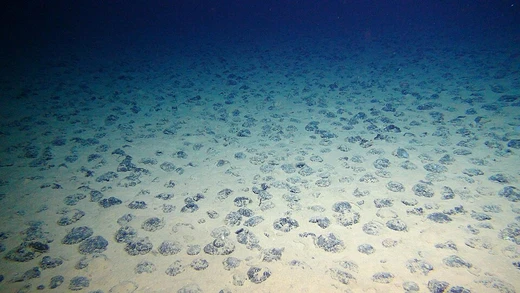
Shoal
Submerged ridge of sand or gravel hazardous to navigation.

A shoal is a natural submerged ridge, bank, or bar composed of sand or other unconsolidated material that rises from the bed of a body of water close to or above the surface, posing a danger to navigation. In oceanography, geomorphology, and geoscience, shoals are also known as sandbanks, sandbars, gravelbars, or bars. Two or more shoals separated by shared troughs or interconnected by sedimentary and hydrographic processes are referred to as a shoal complex. Shoals can be coastal landforms in the sea, classified as a type of ocean bank, or fluvial landforms in rivers, streams, and lakes.
- field
- Oceanography, geomorphology, geoscience
- known_for
- Submerged ridges that pose navigation hazards; formation via sediment deposition and wave action
- composition
- Sand, soil, silt, gravel, cobble, shingle, or boulders
- types
- Sandbars, longshore bars, bay-mouth bars, bay-head bars, barrier bars, peresyp, harbor and river bars
Lore & Background
Shoals are characteristically long and narrow linear ridges. They develop where streams, rivers, or ocean currents promote deposition of sediment and granular material, resulting in localized shallowing of the water. Marine shoals also develop by the in-place drowning of barrier islands due to episodic sea level rise or by erosion and submergence of inactive delta lobes. Wave shoaling occurs when surface waves move toward shallow water, slowing down, increasing in height, and decreasing in wavelength; this can be treacherous for boats and ships. Shoaling can also refract waves, changing their direction, similar to light passing through a prism.
Reader's Guide
Shoals are significant as both natural landforms and navigation hazards. They form through sediment deposition by currents, waves, and tidal action, and can appear as coastal or fluvial features. Their composition varies from sand to boulders, depending on available material and water energy. Types include sandbars, longshore bars, bay-mouth bars, barrier bars, and harbor bars. In nautical contexts, a bar is a shoal with water depth of 6 fathoms (11 meters) or less, posing grounding hazards. Shoals can also be precursors to beach expansion and dune formation, providing windblown sediment. Humans have inhabited shoals since prehistoric times for marine resource exploitation, though such sites are prone to storm damage. The term also applies to larger geological units like spits and tombolos, and to areas like 'The Shoals' in Northwest Alabama, where Muscle Shoals is named for the landform and its mussel abundance.
Did You Know?
- Shoals are also known as sandbanks, sandbars, gravelbars, or bars in oceanography, geomorphology, and geoscience.
- A peresyp is a sandbar that rises above water level and separates a liman or lagoon from the sea, typically with one or several connecting channels.
- Wave shoaling can cause waves to refract, changing direction like light passing through a prism.
- Harbor bars can form due to construction up-coast, upriver development, watershed erosion, or artificially deepened harbors requiring periodic dredging.
More in Coastal & Marine Geology 1-21
Spotted an error? Know more?
This is a living reference — every entry is fact-audited, and reader corrections feed straight into our audit queue. Suggest an edit · See this site's audit record