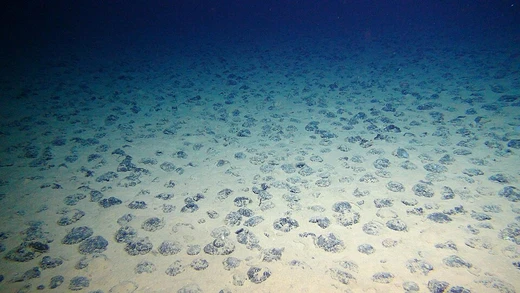
Oceanic trench
Long, narrow depressions marking convergent plate boundaries on the ocean floor.

Oceanic trenches are prominent, long, narrow topographic depressions of the ocean floor, typically 50 to 100 kilometers wide and 3 to 4 kilometers below the surrounding oceanic floor, but can be thousands of kilometers in length. They are a feature of Earth's distinctive plate tectonics, marking the locations of convergent plate boundaries where lithospheric plates move towards each other.
- width
- 50 to 100 km (30 to 60 mi)
- depth_below_surrounding_floor
- 3 to 4 km (1.9 to 2.5 mi)
- global_subduction_rate
- about 3 km² (1.2 sq mi) per year
- number_of_major_trenches
- over 50
- total_area_covered
- 1.9 million km² (about 0.5% of the oceans)
Lore & Background
Oceanic trenches are found mostly around the Pacific Ocean, but also in the eastern Indian Ocean and a few other locations. They are geomorphologically distinct from troughs, being characterized by a V-shaped profile, while troughs have steep sides and flat bottoms. Trenches that are partially infilled are sometimes described as troughs, and some trenches are completely buried and lack bathymetric expression, yet the fundamental plate-tectonic structure remains an oceanic trench.
Reader's Guide
Oceanic trenches are significant as diagnostic features of convergent plate boundaries and subduction zones, where one tectonic plate plunges under another to be recycled in Earth's mantle. They are related to volcanic arcs and Wadati–Benioff zones, and are distinct from continental collision zones. The bathymetry of trenches was poorly known until the late 1940s and 1950s, with major improvements during and after World War II, including the widespread use of echosounders. The early phase of trench exploration peaked with the 1960 descent of the Bathyscaphe Trieste to the bottom of the Challenger Deep. Following the seafloor spreading hypothesis and the plate tectonic revolution, oceanic trenches became an important concept in plate tectonic theory. Much of the fluid trapped in sediments of the subducting slab returns to the surface at the trench, producing mud volcanoes and cold seeps that support unique biomes based on chemotrophic microorganisms. There is concern that plastic debris is accumulating in trenches and threatening these communities.
Did You Know?
- Trenches are typically 50 to 100 kilometers wide and 3 to 4 km below the surrounding oceanic floor.
- Trenches support unique biomes based on chemotrophic microorganisms, fed by fluids from the subducting slab.
Physical Form and Global Distribution
Oceanic trenches are among the most dramatic landforms on Earth, appearing as long, narrow depressions carved into the ocean floor. Each trench typically spans 50 to 100 kilometers in width and sits roughly 3 to 4 kilometers below the adjacent seafloor, yet individual features can stretch for thousands of kilometers. Their distribution is heavily concentrated around the Pacific basin, though segments also appear in the eastern Indian Ocean, the Atlantic, and the Mediterranean. Morphologically, a trench presents an asymmetric V-shaped cross-section, with a steeper inner slope of 8 to 20 degrees facing the overriding plate and a gentler outer slope of about 5 degrees on the subducting side. They are typically positioned roughly 200 kilometers from a volcanic arc.
Tectonic Engine and Subduction
Oceanic trenches are the surface expression of one of Earth's most fundamental geological processes: the convergence of tectonic plates. At these boundaries, two lithospheric plates drift toward one another at rates ranging from a few millimeters to more than ten centimeters per year. Globally, oceanic lithosphere is fed into trenches at a pace of roughly three square kilometers per year. The trench marks the precise line where the flexing, subducting slab first begins its descent beneath the overriding plate, initiating a journey that ultimately recycles that crustal material deep into the mantle. Trenches are diagnostic features of convergent boundaries, appearing alongside volcanic arcs and Wadati-Benioff earthquake zones. They are distinct from continental collision zones like the Himalayas, where buoyant continental crust halts subduction entirely and gives rise to features such as peripheral foreland basins—the sediment-filled floodplains of the Ganges or the Tigris-Euphrates being classic examples. In a true oceanic trench, at least one of the colliding plates must be oceanic lithosphere, ensuring the subduction cycle continues.
From Mystery to Scientific Concept
For much of the nineteenth century, the deep ocean remained largely unknown. The laying of transatlantic telegraph cables across the seafloor further drove the need for accurate bathymetric data. In the 1920s and 1930s, Felix Andries Vening Meinesz used a submarine-mounted gravimeter to detect belts of negative gravity anomalies near island arcs, proposing his tectogene hypothesis of downwelling crustal rock. World War II brought a surge of bathymetric surveys in the western Pacific, revealing the linear character of these deeps. The widespread adoption of echosounders in the 1950s and 1960s confirmed the term's morphological usefulness. The 1960 Bathyscaphe Trieste dive to the Challenger Deep marked a milestone, and the subsequent seafloor spreading and plate tectonic revolutions cemented the oceanic trench as a central concept in Earth science.
Life in the Abyss and Modern Threats
Beneath the crushing pressure and total darkness of the deep ocean, trenches host ecosystems unlike any other on the planet. As the subducting slab carries water-laden sediments downward, much of that trapped fluid is forced back toward the surface at the trench itself, producing mud volcanoes and cold seeps. These hydrological features sustain unique biomes built around chemotrophic microorganisms—organisms that derive energy from chemical reactions rather than sunlight. These microbial communities form the base of food webs in environments where photosynthesis is impossible. Yet these fragile deep-sea ecosystems now face a growing threat. There is mounting concern that plastic debris is accumulating in oceanic trenches, threatening the very communities that depend on the chemical energy released by cold seeps and mud volcanoes for their survival. The combination of extreme depth, total darkness, and the presence of human-made waste in these isolated habitats raises serious questions about the future of trench biomes.
Frequently Asked Questions
What is an oceanic trench?
An oceanic trench is a long, narrow depression carved into the ocean floor, typically spanning 50 to 100 km in width and sitting 3 to 4 km below the surrounding seafloor. They can stretch for thousands of kilometers and represent some of the deepest features on Earth's surface.
How do oceanic trenches form?
They develop at convergent plate boundaries, where two lithospheric plates push toward one another and one is forced beneath the other in a process called subduction. The bending and sinking of the overriding plate's edge carves out the trench's characteristic deep, narrow shape.
How many major oceanic trenches exist and how much area do they cover?
There are more than 50 major trenches identified around the globe, collectively covering roughly 1.9 million square kilometers. That total area accounts for about half a percent of the world's ocean surface.
How much subduction happens at trenches each year?
Globally, oceanic plate material is drawn into trenches at a rate of approximately 3 square kilometers per year. This continuous recycling of crust is a key driver of Earth's plate tectonic engine.
Why are oceanic trenches important in marine geology?
They serve as the primary surface markers of where oceanic crust is being consumed and returned to the mantle, making them central to understanding the rock cycle and plate dynamics. Their extreme depths and unique pressure environments also host distinct biological communities that attract research interest.
More in Coastal & Marine Geology 1-21
Spotted an error? Know more?
This is a living reference — every entry is fact-audited, and reader corrections feed straight into our audit queue. Suggest an edit · See this site's audit record